What is a Zigbee Module and What Can You Do with It?

A zigbee module is a low-power wireless communication component that lets smart devices talk to each other over a mesh network. It is widely used in smart homes, industrial automation, sensors, and DIY electronics because it offers long battery life, reliable communication, and scalable device networking.
Key Takeaways
- Zigbee modules use the IEEE 802.15.4 wireless standard.
- They create mesh networks where devices relay signals to each other.
- Zigbee consumes far less power than Wi-Fi.
- Popular chips include the CC2530, CC2652P, and Silicon Labs EFR32.
- You can connect Zigbee hardware to Arduino, ESP32, Raspberry Pi, and Home Assistant.
- Zigbee works exceptionally well for smart homes and battery-powered sensors.
- Products like the Aqara Relay T1 and XBee modules simplify wireless automation projects.
What is a Zigbee Module?
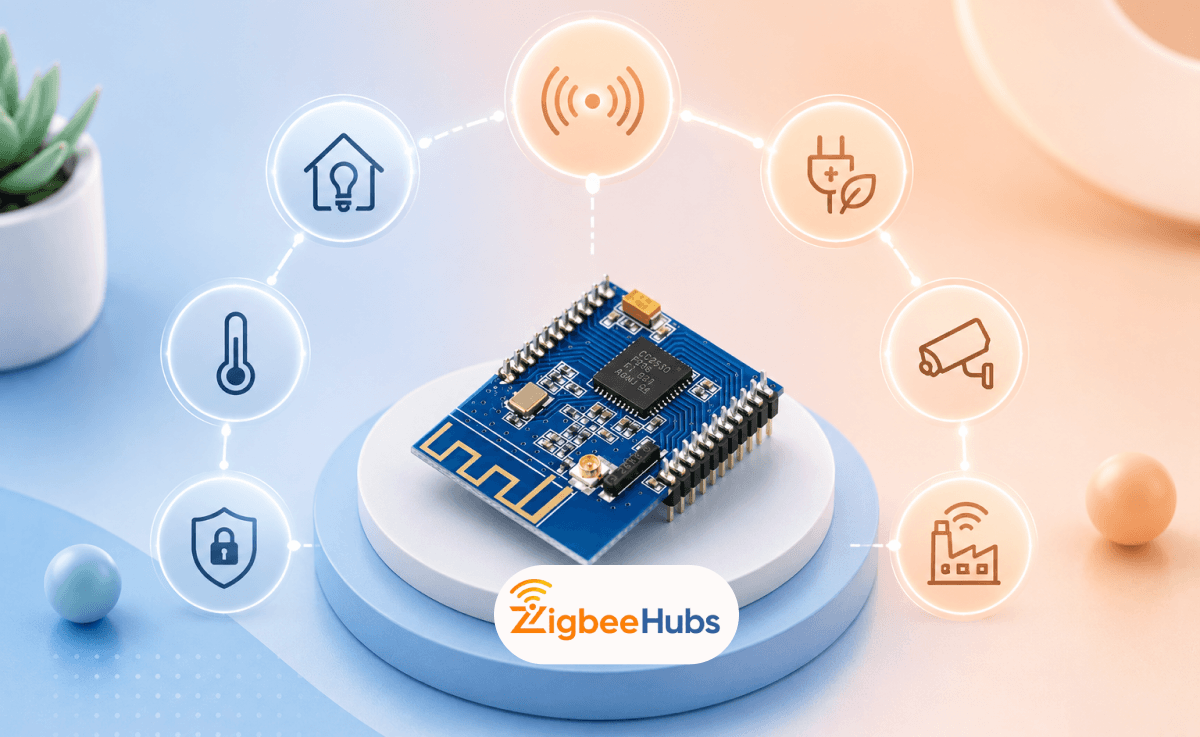
A zigbee module is a compact wireless communication device designed for low-data, low-power networking. It usually contains:
- A zigbee chip
- A radio antenna
- Flash memory
- A microcontroller
- UART or SPI communication interfaces
Unlike Wi-Fi, Zigbee focuses on stability, battery efficiency, and device-to-device communication rather than internet bandwidth.
In real-world use, I often see Zigbee modules running for years on small coin-cell batteries while maintaining reliable connectivity across dozens of devices.
Why Zigbee Exists?
Traditional wireless technologies struggle in one of these areas:
- Power consumption
- Device scalability
- Network stability
- Range
Zigbee solves this by using:
- Low-energy communication
- Mesh routing
- Lightweight data packets
That makes it perfect for:
- Motion sensors
- Smart switches
- Door sensors
- Smart relays
- Environmental monitoring
- Industrial telemetry
How Does a Zigbee Module Work?
A Zigbee network contains three major device types:
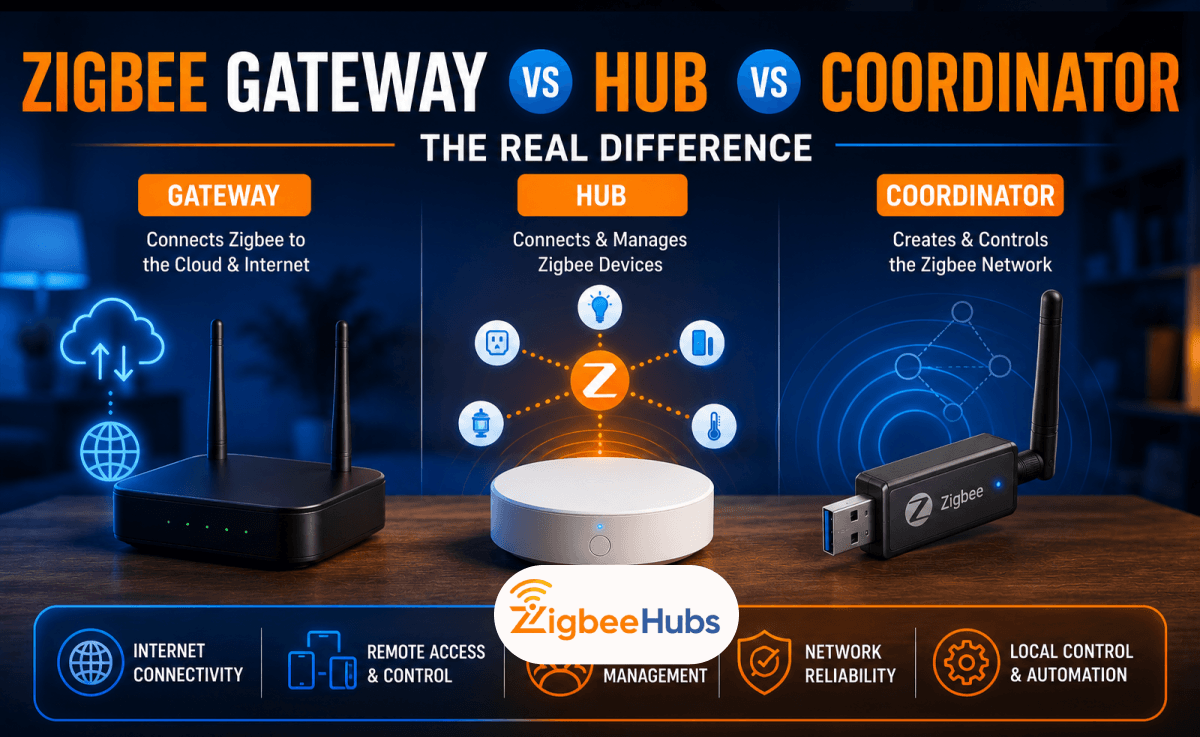
Coordinator
The coordinator creates and manages the network.
There can only be one coordinator in a Zigbee network.
Examples include:
- Home Assistant coordinators
- Aqara hubs
- SONOFF Zigbee dongles
Router
Routers extend the network range.
Most mains-powered Zigbee devices automatically become routers.
Examples:
- Smart plugs
- Smart relays
- Smart wall switches
End Devices
These are battery-powered devices that communicate through routers.
Examples:
- Temperature sensors
- Motion sensors
- Door sensors
Why is Mesh Networking Important?
Mesh networking is the main reason Zigbee performs so well in smart homes.
Instead of connecting every device directly to the coordinator, devices relay messages between each other.
Benefits include:
- Better range
- More stability
- Lower power usage
- Improved reliability
For example, if a door sensor cannot reach your coordinator directly, it can route data through a nearby smart plug.
This is one reason Zigbee usually scales better than Wi-Fi for large smart homes.
What is the Difference Between a Zigbee Chip and a Zigbee Module?
People often confuse these terms.
Zigbee Chip
A zigbee chip is the actual integrated circuit responsible for wireless communication.
Examples:
- TI CC2530
- CC2652P
- EFR32MG21
Zigbee Module
A zigbee module includes the chip plus supporting hardware:
- PCB
- Antenna
- Voltage regulation
- Interfaces
- Firmware support
The module is what you actually connect to your project.
What Can You Do With A Zigbee Module?
Build a Smart Home
This is the most popular use case.
You can create:
- Smart lighting systems
- Smart switches
- Motion automation
- Climate monitoring
- Smart curtains
- Security systems
I personally recommend Zigbee for users building local-first smart homes because it avoids Wi-Fi congestion and scales extremely well.
Create Arduino Zigbee Projects
An arduino zigbee setup is ideal for DIY automation.
You can build:
- Wireless sensors
- Remote controls
- Environmental monitors
- Smart irrigation systems
- DIY alarm systems
Most Arduino projects use UART communication with Zigbee hardware.
 Sarah Diyana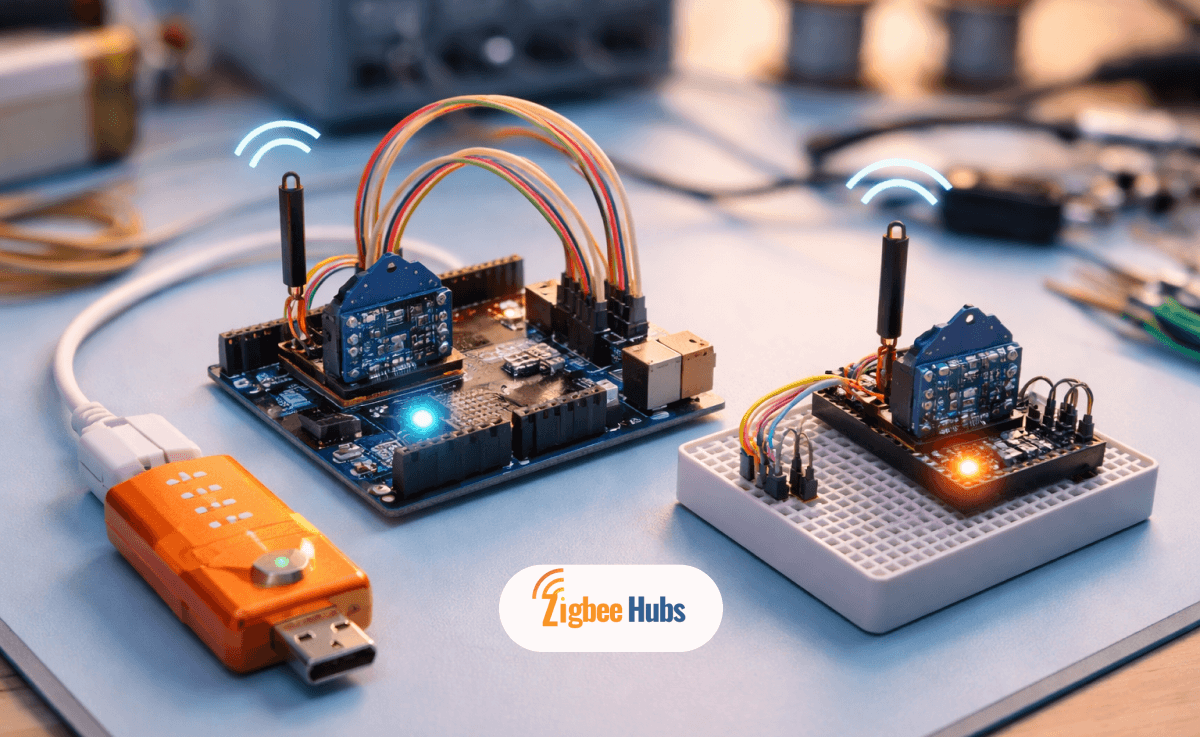
Industrial Monitoring
Factories often use Zigbee because of its:
- Reliability
- Low maintenance
- Long battery life
Applications include:
- Temperature monitoring
- Equipment status reporting
- Warehouse tracking
- Energy management
Agricultural Automation
Zigbee works extremely well in agriculture because sensors can run for years on batteries.
Common examples include:
- Soil monitoring
- Greenhouse automation
- Water management
- Livestock tracking
Best Zigbee Modules and Hardware
⭐CC2530 Zigbee Module
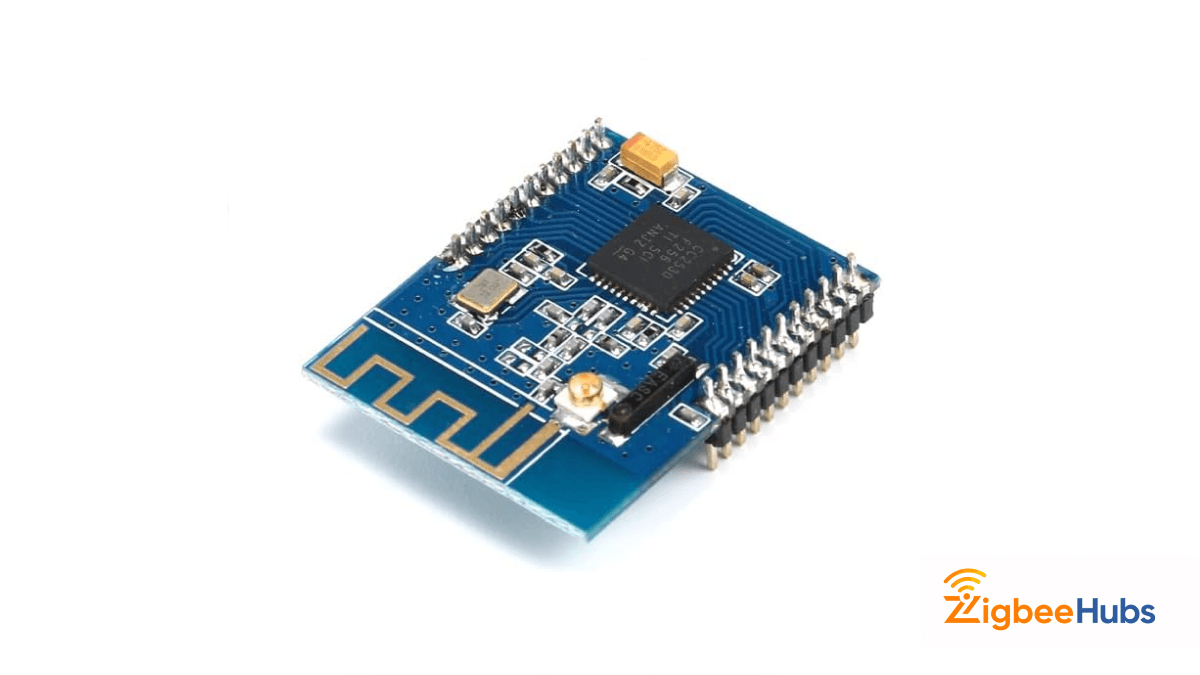
The CC2530 is a Texas Instruments 8051-based Zigbee System-on-Chip designed for IEEE 802.15.4 communication.
The cc2530 remains one of the most recognizable Zigbee platforms in the DIY world.
I used CC2530 boards extensively during early Zigbee2MQTT testing because they were inexpensive and easy to find.
Key Features
- 2.4 GHz radio
- Integrated MCU
- Low power consumption
- Zigbee support
- Strong community firmware ecosystem
Pros
- Extremely affordable.
- Huge community support.
- Great learning platform.
- Widely compatible with DIY tools.
Cons
- Older architecture.
- Limited processing power.
- Requires flashing tools.
- Not ideal for very large networks.
Best Use Case
- DIY experimentation
- Learning Zigbee
- Small sensor projects
 Sarah Diyana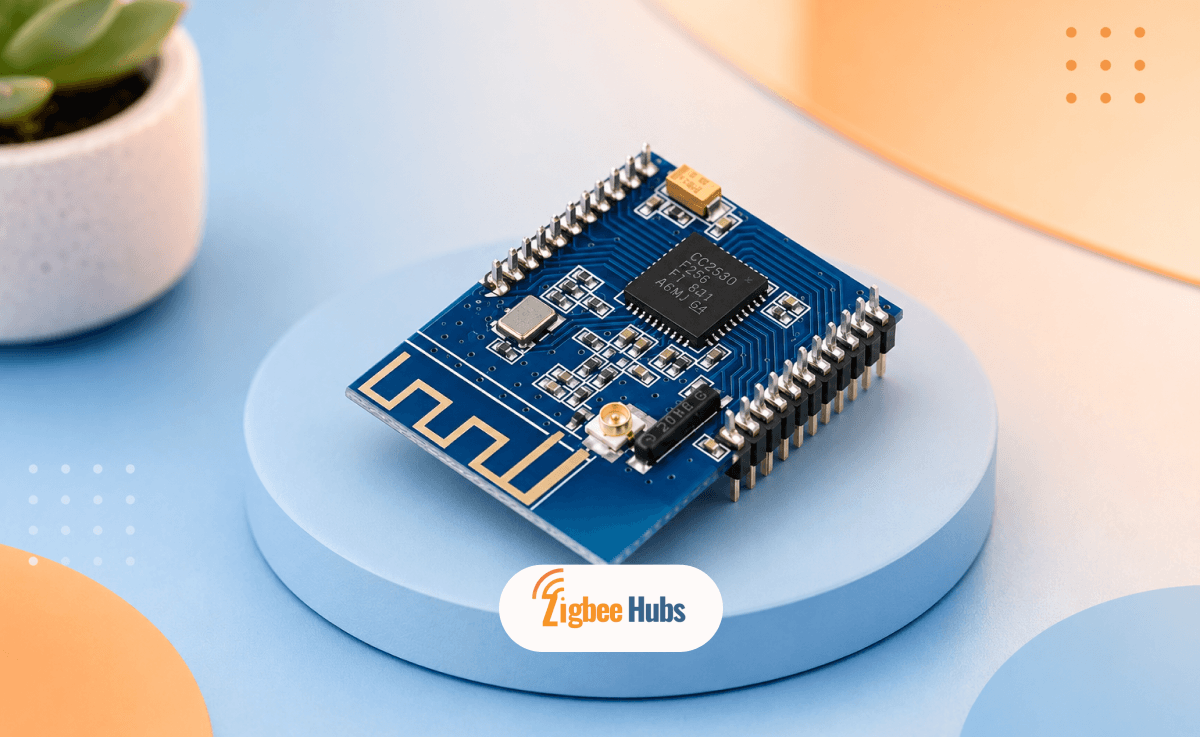
XBee Modules
xbee modules are among the easiest professional-grade wireless modules to use. I often recommend them to beginners who want reliable wireless communication without manually flashing firmware.
XBee modules are wireless communication devices developed by Digi International that support Zigbee and other protocols.
Key Features
- UART communication
- Mesh networking
- Easy configuration
- Long-range variants
- Excellent documentation
Pros
- Beginner-friendly.
- Extremely reliable.
- Strong industrial reputation.
- Excellent software tools.
Cons
- Higher cost.
- Larger physical size.
- Less flexible for firmware customization.
Best Use Case
- Industrial projects
- Educational projects
- Fast prototyping
Silicon Labs EFR32 Series
The EFR32 family powers many modern Matter and Zigbee products. A high-performance zigbee microcontroller platform with advanced security and multi-protocol support.
Key Features
- ARM Cortex processors
- Matter support
- Thread support
- Zigbee 3.0 support
- Secure Vault security
Pros
- Modern architecture.
- Excellent performance.
- Future-ready.
- Multi-protocol capable.
Cons
- More expensive.
- Steeper learning curve.
- Advanced development environment.
Best Use Case
- Commercial IoT products
- Matter development
- Advanced smart home systems
Aqara Relay T1
The aqara relay t1 is one of my favorite examples of practical Zigbee hardware. It allows you to convert traditional electrical appliances into smart devices without replacing the entire switch.
A compact Zigbee smart relay designed for smart home automation and hidden behind wall switch installations.
Key Features
- Zigbee 3.0 support
- Energy monitoring
- Compact installation
- Local automation support
- Home Assistant compatibility
Pros
- Very reliable.
- Compact size.
- Strong Home Assistant support.
- Excellent automation response time.
Cons
- Requires neutral wiring.
- Installation may require electrical experience.
- Best performance with a strong Zigbee mesh.
Best Use Case
- Smart lighting
- Smart fans
- Hidden relay automation
- Retrofitting traditional homes
How to Connect a Zigbee Module to Arduino?
An arduino zigbee setup is simpler than most people think.
What You Need
- Arduino Uno or Nano
- Zigbee module
- Jumper wires
- USB cable
- Serial terminal software
Steps
- Zigbee TX → Arduino RX
- Zigbee RX → Arduino TX
- Many Zigbee modules require 3.3V.
- This is extremely important.
- I have seen many beginners accidentally damage modules by supplying 5V directly.
- Set PAN ID.
- Set baud rate.
- Set device role.
- Use the Arduino Serial library to send and receive data.
- You can send sensor data wirelessly between two Arduinos using paired Zigbee modules.
Zigbee vs Wi-Fi vs Bluetooth
| Feature | Zigbee | Wi-Fi | Bluetooth |
|---|---|---|---|
| Power Usage | Very Low | High | Low |
| Mesh Networking | Yes | Limited | Partial |
| Battery Life | Excellent | Poor | Moderate |
| Device Count | Very High | Moderate | Low |
| Internet Speed | Low | Very High | Low |
| Best For | Smart Homes | Streaming | Personal Devices |
 Sarah Diyana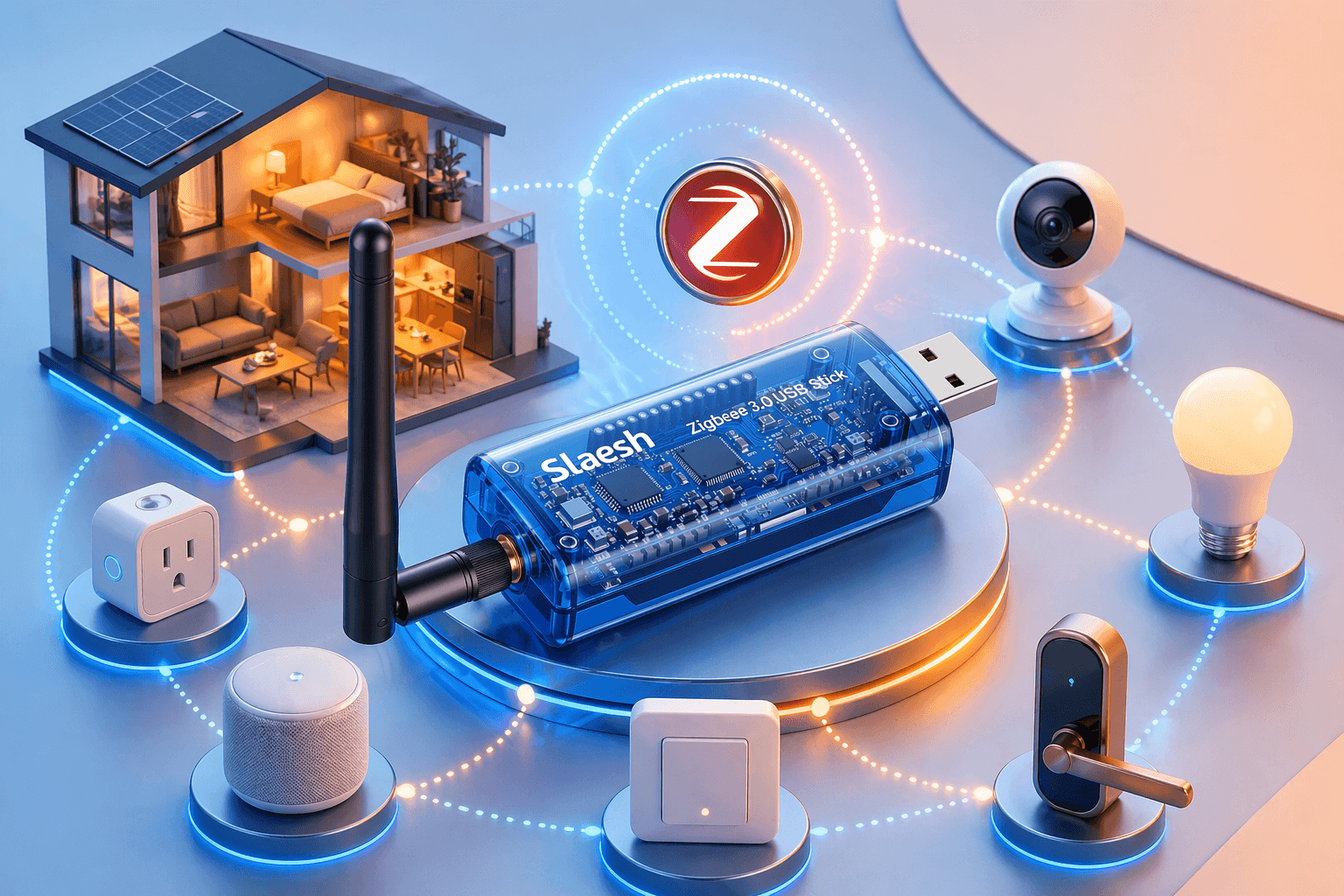
What Should You Look for in a Zigbee Module?
Coordinator Compatibility
Always confirm compatibility with:
- Home Assistant
- Zigbee2MQTT
- ZHA
- Aqara
- SmartThings
Compatibility problems are one of the biggest mistakes beginners make.
Antenna Design
External antennas usually improve range significantly.
This matters in:
- Concrete buildings
- Large homes
- Multi-floor environments
Firmware Ecosystem
Good firmware support saves enormous amounts of troubleshooting time.
This is one reason the CC2530 and CC2652P remain popular.
Future Protocol Support
Modern hardware increasingly supports:
- Matter
- Thread
- Zigbee simultaneously
This gives better long-term flexibility.
Common Problems with Zigbee Modules
Wi-Fi Interference
Both Wi-Fi and Zigbee use the 2.4 GHz spectrum.
I strongly recommend selecting Zigbee channels carefully.
Good Zigbee channels:
- 15
- 20
- 25
Weak Mesh Networks
Battery-powered devices do not extend the network.
You need powered routers such as:
- Smart plugs
- Relays
- Wall switches
USB 3.0 Interference
USB 3.0 ports can create radio interference.
A simple USB extension cable often fixes this completely.
Are Zigbee Modules Still Worth it in 2026?
Absolutely.
In fact, Zigbee has become even more important because of:
- Matter adoption
- Smart home growth
- Local automation demand
- Energy-efficient IoT devices
Many Matter ecosystems still rely heavily on Zigbee internally.
Even premium smart home brands continue using Zigbee because it remains reliable, scalable, and power efficient.
Conclusion
A Zigbee module is one of the most practical wireless technologies for smart homes and IoT systems. It delivers low power consumption, reliable mesh networking, and excellent scalability for everything from Arduino experiments to enterprise automation. Whether you choose a simple CC2530 board, professional XBee radio, or advanced Zigbee microcontroller platform, Zigbee gives you a stable foundation for long-term smart device communication. If you plan to build a serious smart home, learning Zigbee is one of the best investments you can make.