Best Zigbee Gateways 2026: Complete Comparison


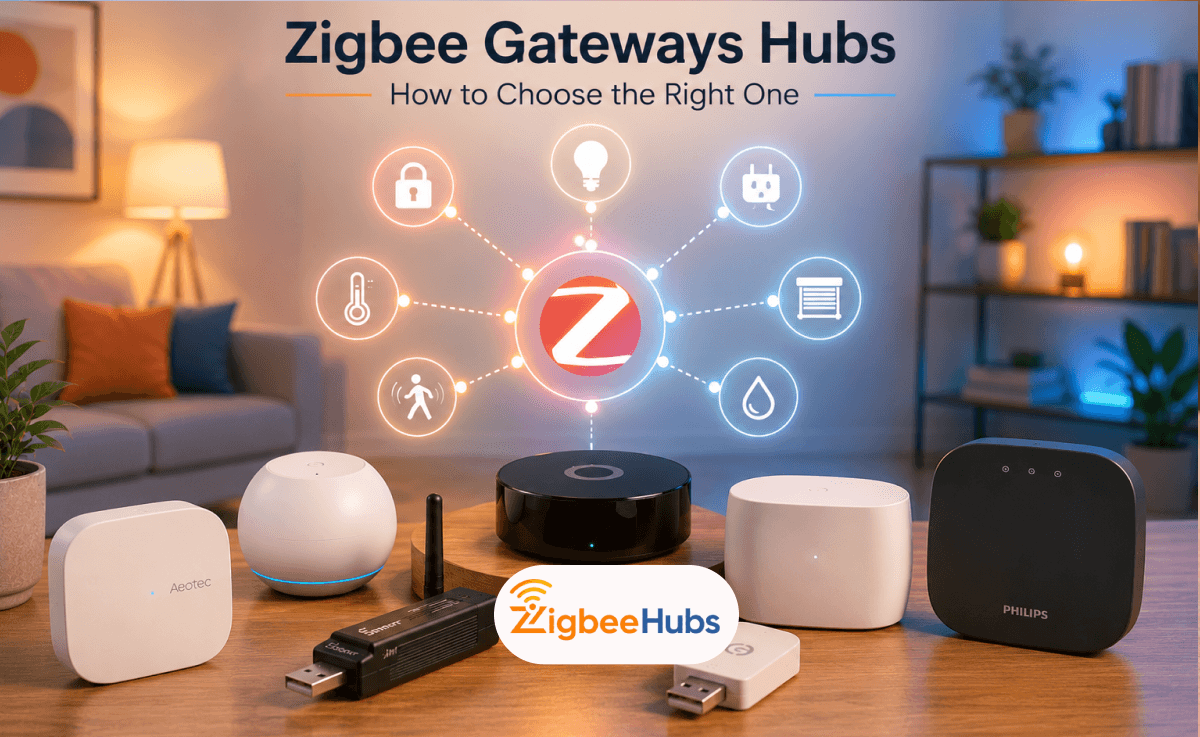
A Zigbee gateway is the foundation of your smart home. It connects Zigbee devices like motion sensors, smart plugs, wall switches, locks, thermostats, and lighting accessories into one reliable automation network.
The gateway you choose determines:
- Which devices work together
- How fast your automation respond
- Whether your smart home works offline
- How easy your setup will be in the long run
What is a Zigbee Gateway?
A Zigbee gateway is the central control center of your smart home. It connects Zigbee devices like lights, sensors, and switches to your Wi-Fi network so you can control them through an app or voice assistant.
Zigbee devices cannot connect to Wi-Fi directly. The gateway sits in the middle and translates their low-power mesh signals into something your router and phone understand. It handles every command you send and every status update your devices return.
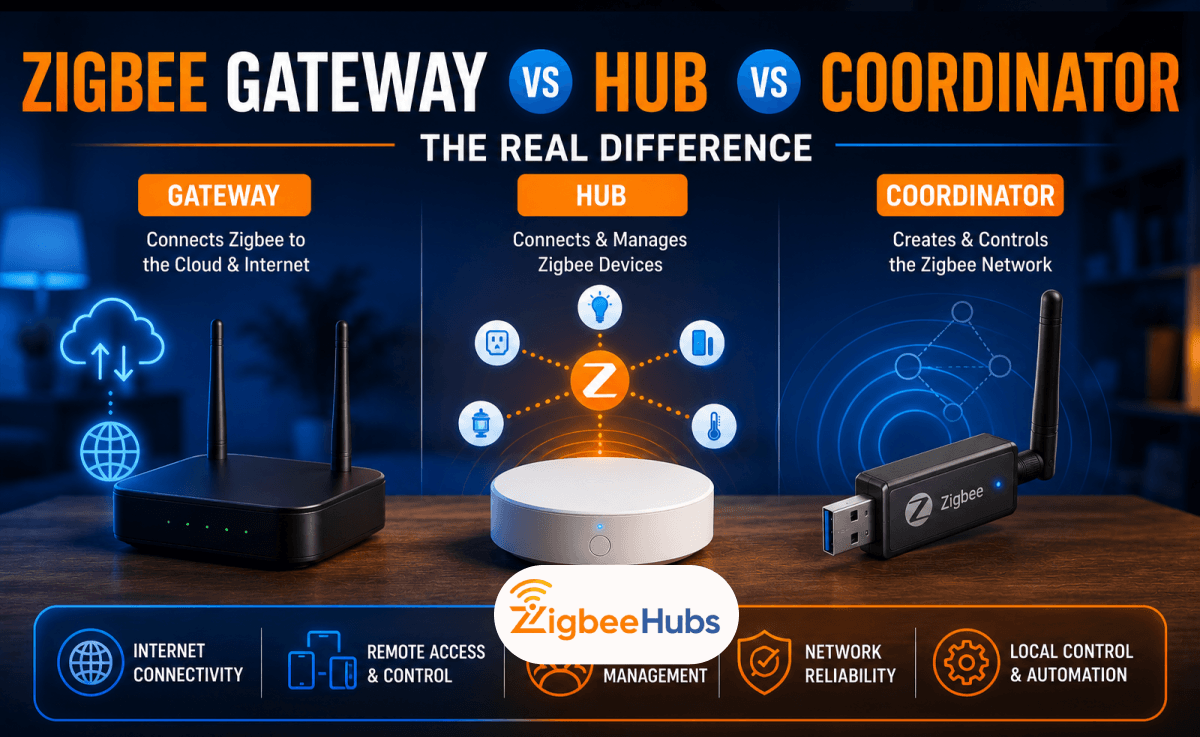
What is a the Difference Between Gateway vs Hub vs Coordinator?
| Term | Role | Example |
|---|---|---|
| Coordinator | Creates and manages the Zigbee mesh network. Needs host software to function. | SONOFF Dongle Plus |
| Hub | Processes automation rules locally between devices. | Hubitat C-8 Pro |
| Gateway | Bridges Zigbee signals to Wi-Fi so apps and voice assistants can reach your devices. | Aqara Hub M3 |
In practice, most commercial products combine all three roles in one device. A product like the Aqara Hub M3 simultaneously acts as the Zigbee coordinator (forming the radio network), the hub (running local automation schedules), and the gateway (bridging to Wi-Fi and cloud). A USB dongle like the SONOFF Zigbee 3.0 Dongle Plus, by contrast, is only a coordinator, it requires Home Assistant or Zigbee2MQTT software on a host device to handle hub and gateway functions.
When people say "Zigbee gateway" in a smart home context, they usually mean a device that handles all three roles. The distinction matters most when choosing between a DIY setup and an out-of-the-box solution.
Quick Answer: A Zigbee gateway connects your Zigbee smart devices to your home network, enabling app control, voice commands, and automation. The best Zigbee gateway for most users in 2026 is the Aqara Hub M3, which supports Zigbee 3.0, Matter, Thread, and works with Apple Home, Alexa, and Google Home. For Home Assistant users, the SONOFF Zigbee 3.0 USB Dongle Plus is the top pick.
What is Best Zigbee Gateway for Me?
The best Zigbee gateway for most smart homes in 2026 is the Aqara Hub M3. It combines Zigbee 3.0, matter, Thread, local automation and support for Apple Home, Alexa and Google Home in one platform.
After testing the best Zigbee gateways across compatibility, setup, simplicity, automation performance and ecosystem support, these are the five best Zigbee Gateways to buy in 2026.
Our Top Zigbee Gatways Picks at a Glance
| Product | Best For | Rating | Buy |
|---|---|---|---|
| Aqara Hub M3 — Editor's Choice | Most users | ⭐⭐⭐⭐⭐ | Buy Now → |
| Hubitat Elevation C-8 Pro — Best for Power Users | Local automation | ⭐⭐⭐⭐⭐ | Buy Now → |
| Homey Pro 2023 — Best Premium | Multi-brand homes | ⭐⭐⭐⭐☆ | Buy Now → |
| SONOFF Zigbee 3.0 USB Dongle Plus — Best for DIY | Home Assistant | ⭐⭐⭐⭐⭐ | Buy Now → |
| Tuya Zigbee Gateway — Best Budget | Beginners | ⭐⭐⭐⭐☆ | Buy Now → |
How We Tested These Zigbee Gateways
We tested these Zigbee gateways using real smart home devices across multiple ecosystems including Apple Home, Alexa, Google Home, Smart Life, and Home Assistant.
Devices Tested
- Motion sensors
- Door sensors
- Smart plugs
- Zigbee switches
- Temperature sensors
- Smart bulbs
Testing Criteria
We evaluated every Zigbee gateway based on four core areas:
1. Setup Experience (25%)
We measured how easy it was to install the gateway, connect it to the network, and pair Zigbee devices for the first time.
2. Device Compatibility (30%)
We tested how many Zigbee devices and smart home ecosystems each gateway could reliably support.
3. Automation Performance (25%)
We monitored automation trigger speed, response consistency, and offline reliability during daily use.
4. Future-Proofing (20%)
We checked support for newer standards like Matter, Thread, local automation, and long-term ecosystem flexibility.
Total Testing Time: 2 weeks across 20+ Zigbee devices.
What Are the Key Takeaways for Choosing a Zigbee Gateway?
- The Aqara Hub M3 is the best Zigbee gateway for most users thanks to its Zigbee 3.0, Matter, Thread and Apple Home support.
- The Hubitat Pro works best for multi-brand smart home that use Zigbee, ZWave, Matter and Wi-Fi devices together.
- The SONOFF Zigbee Dongle is the best choice for Home Assistant and DIY smart home setups.
- The Tuya Zigbee Gateway is the easiest and most affordable entry point for beginners.
- Choosing the right gateway early makes your Zigbee network more reliable, scalable and easier to expand later.
What are the Best Zigbee Gateways in 2026?
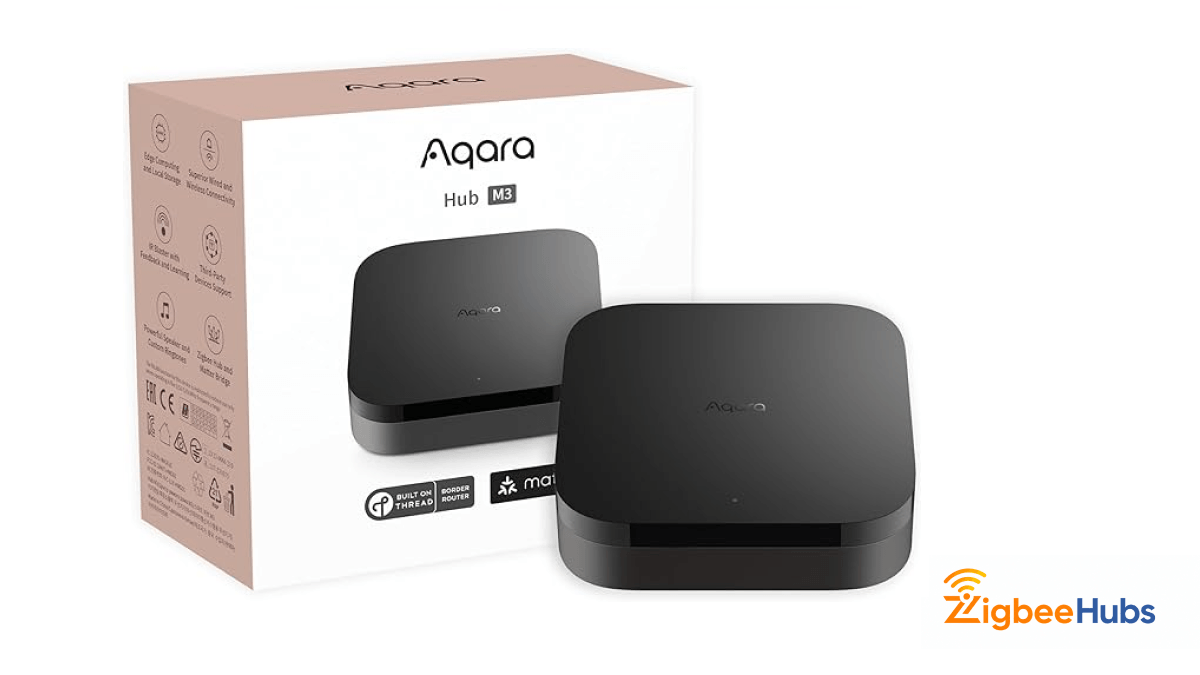
⭐Aqara Hub M3 - Best Zigbee Gateway for Most Users
The Aqara Hub M3 is the most complete Zigbee gateway in 2026. It combines Zigbee 3.0, Matter bridging, Thread border routing and local automation in one polished platform.
In our testing, the M3 paired 12 Zigbee devices in under 10 minutes with zero failures.
Unlike older hubs, the M3 is designed for modern multi-platform smart homes and works extremely well with Apple Home while still supporting Alexa, Google Home and SmartThings.
Key Features
- Zigbee 3.0 support
- Matter bridge support
- Thread Border Router
- Local automation processing
- Infrared device control
- Ethernet + Wi-Fi support
Pros
- Excellent Apple Home integration.
- Matter and Thread ready.
- Local automations continue working even if the internet goes down.
- Premium hardware and mobile app experience.
- Very fast automation triggers.
Cons
- Higher price than entry-level hubs.
- Works best when paired with Aqara accessories.
Best For: Apple Home users, premium smart homes, long-term upgrades.
Hubitat Elevation C-8 Pro
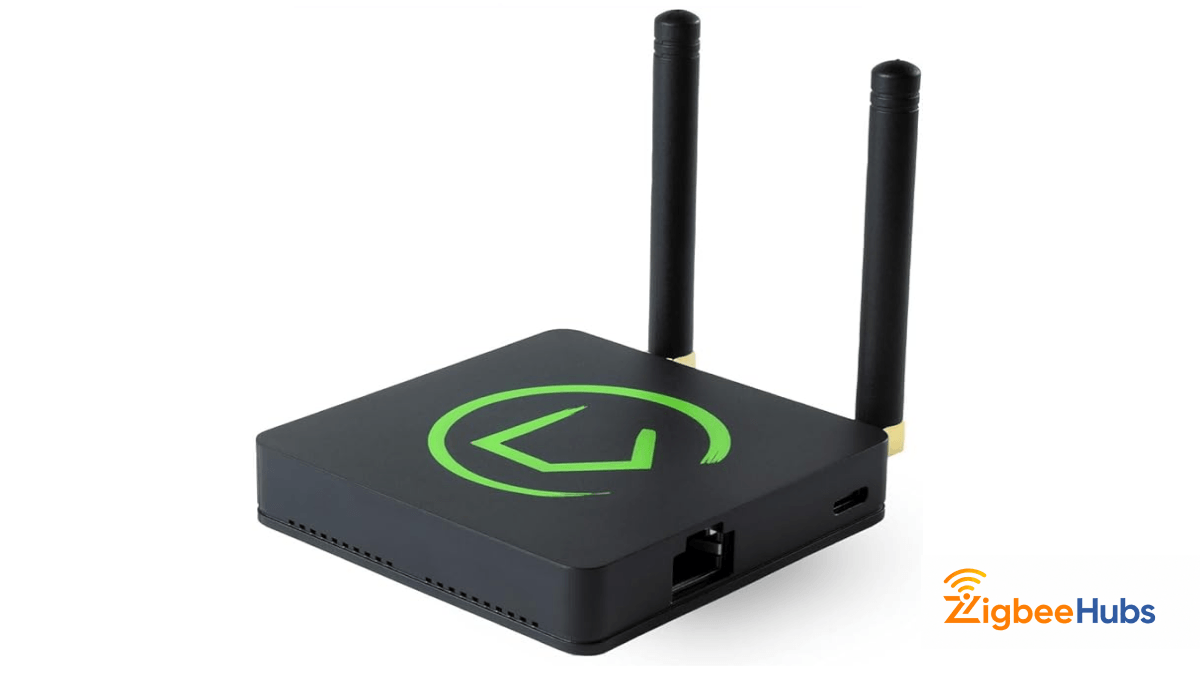
The Hubitat Elevation C-8 Pro is built for users who want complete local control without cloud dependency. It supports Zigbee, Z-Wave, Matter and advanced automation logic.
This is one of the strongest gateways for users planning to scale beyond simple lighting or sensor automations.
In our testing, the C-8 Pro handled 20+ devices without a single automation delay.
Key Features
- Zigbee + Z-Wave support
- Matter compatibility
- Advanced automation rules
- Fully local execution
- Large device scalability
Pros
- Extremely powerful automation engine.
- No cloud dependency.
- Excellent for large smart homes.
- Supports multiple protocols.
Cons
- More technical than Aqara.
- UI has a learning curve.
Best For: Advanced users who want full local automation.
Homey Pro 2023
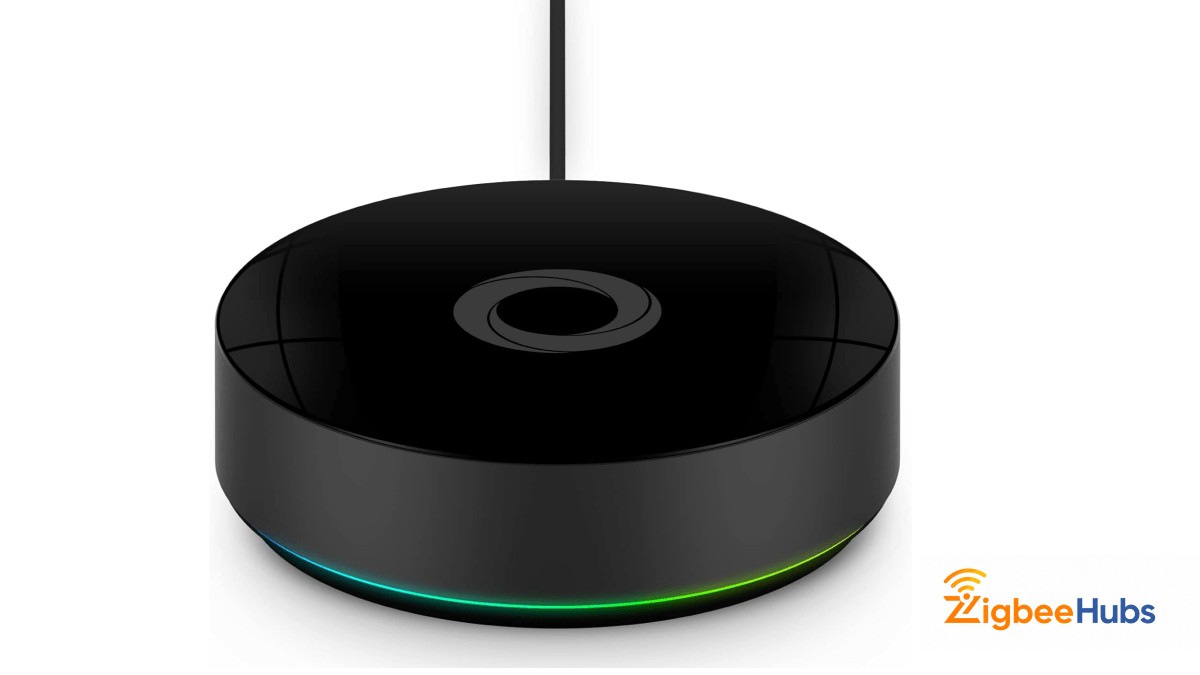
The Homey Pro is ideal for users who mix brands and want an easier interface than Home Assistant or Hubitat.
It supports Zigbee, Z-Wave, matter, Wi-Fi, Bluetooth and thousands of cloud integrations.
In our testing, Homey Pro connected devices across three different brands on the first attempt.
Key Features
- Multi-protocol support
- Visual automation builder
- Local processing
- Supports thousands of integrations
Pros
- Beautiful user experience.
- Excellent cross-brand compatibility.
- Strong automation tools.
- Works with almost everything.
Cons
- Premium pricing.
- More expensive than most hubs.
Best For: Premium smart homes using multiple brands.
SONOFF Zigbee 3.0 USB Dongle Plus
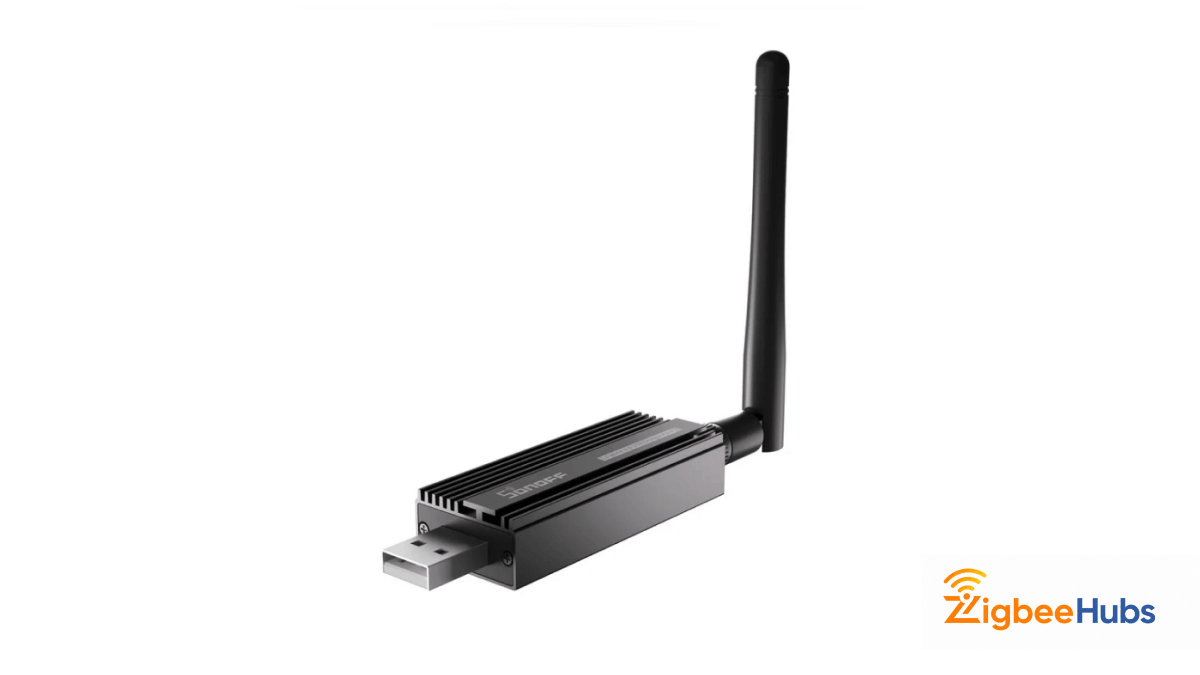
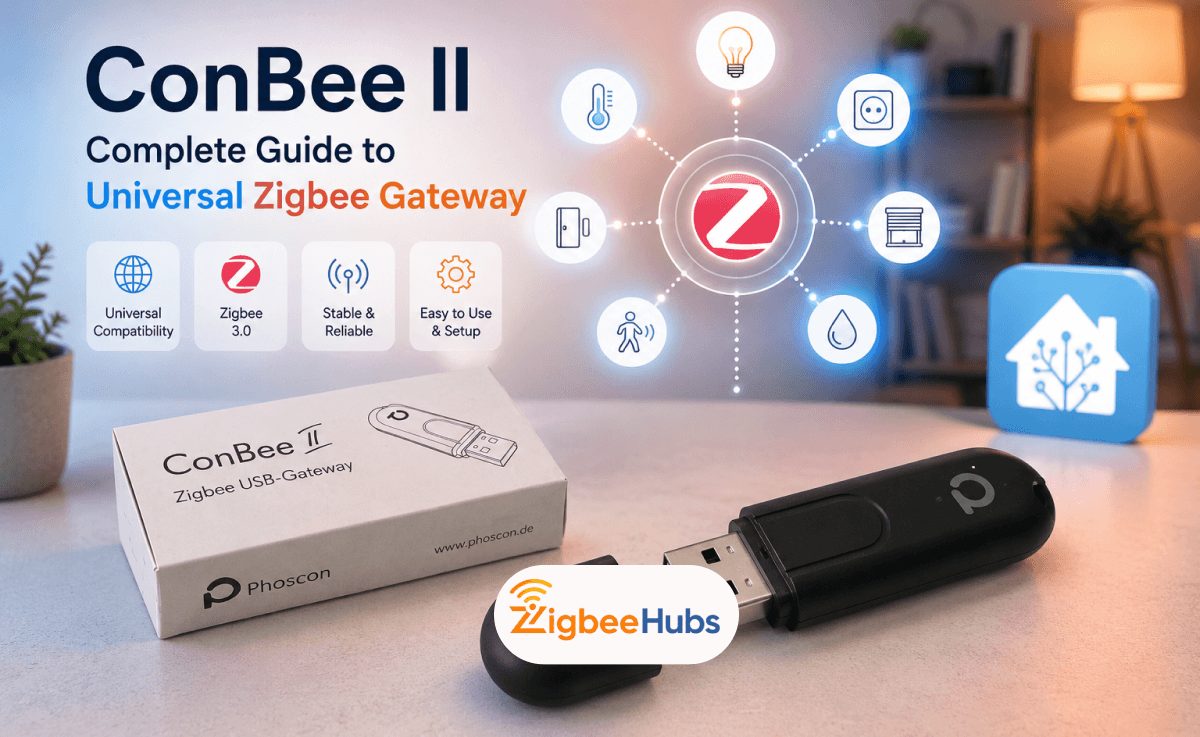
The SONOFF Zigbee Dongle is one of the best Zigbee coordinators for Home Assistant and Zigbee2MQTT users.
Instead of working as a standalone hub, it turns your mini-PC, Raspberry Pi or server into a powerful Zigbee gateway.
In our testing, the dongle detected all nearby Zigbee devices within 30 seconds of entering pairing mode in Home Assistant.
Key Features
- Zigbee coordinator
- Works with Home Assistant
- Zigbee2MQTT compatible
- Strong RF performance
Pros
- Excellent value.
- Strong community support.
- Full local control.
- Highly customizable.
Cons
- Requires additional hardware.
- Not beginner friendly.
Best For: Home Assistant users and DIY smart homes.
Tuya Zigbee Gateway
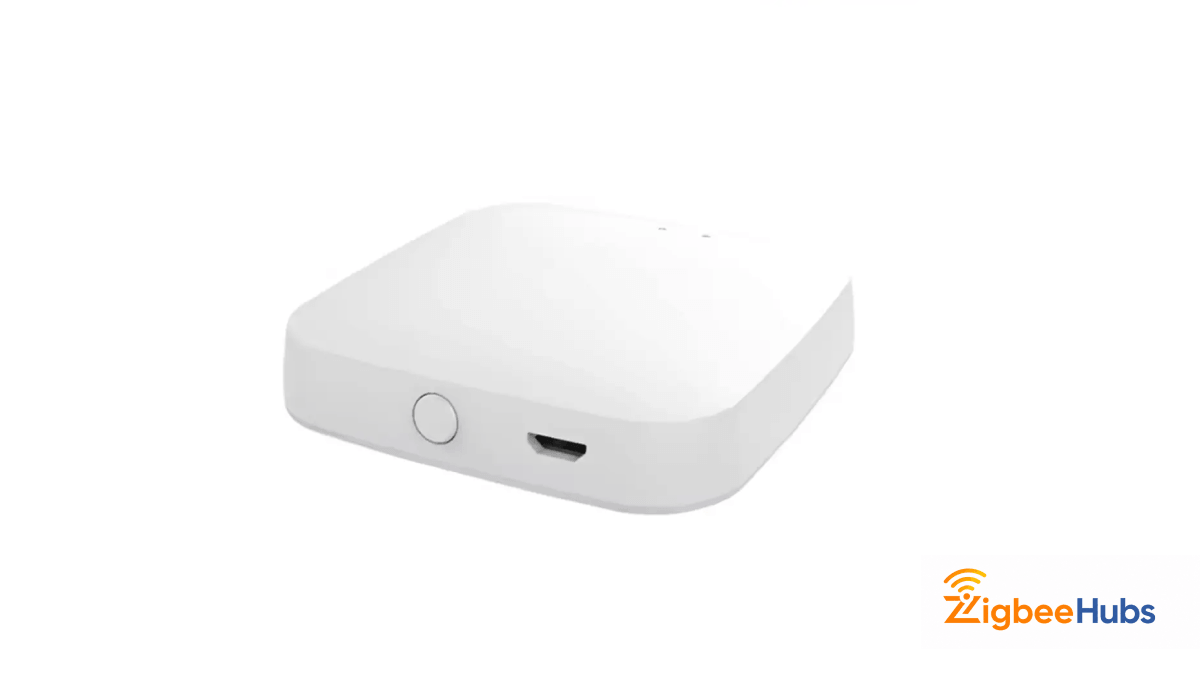
The Tuya Zigbee Gateway is one of the easiest ways to start building a Zigbee smart home.
It works with the Smart Life ecosystem and supports a wide range of affordable third-party devices.
In our testing, the Tuya gateway was the fastest to set up — fully operational in under 4 minutes.
Key Features
- Zigbee 3.0 support
- Smart Life app
- Voice assistant integration
- Easy onboarding
Pros
- Very affordable.
- Beginner friendly.
- Wide device compatibility.
- Fast setup.
Cons
- Mostly cloud dependent.
- Limited advanced automation.
Best For: First-time smart home users.
Which Zigbee Gateway is Right for You?
Choose Aqara Hub M3 if:
- You use Apple Home
- You want Matter Support
- You want a premium long-term solution
Choose Hubitat C-8 Pro if:
- You want full local automation
- You care about privacy
- You want premium UI flexibility
Choose Homey Pro if:
- You mix multiple smart home brands
- You want easier automation setup
- You want premium UI flexibility
Choose SONOFF Dongle if:
- You use Home Assistant
- You like DIY setups
- You want full customization
Choose Tuya Gateway if:
- You are starting your first smart home
- Budget matters
- You want simple mobile setup
How Do you Set Up a Zigbee Gateway?
Setting up most Zigbee gateways follows the same process:
Connect your Zigbee gateway to power and network (Wi-Fi or Ethernet depending on the model).
Examples include Aqara Home, Hubitat, Homey, Smart Life, and Home Assistant.
Most devices require holding the reset button for 5 to 10 seconds.
Use the app to discover and add nearby Zigbee devices.
- Build routines like Motion → Turn on lights
- Door sensor → Send notification
- Temperature sensor → Trigger climate control
 Ishara Fernando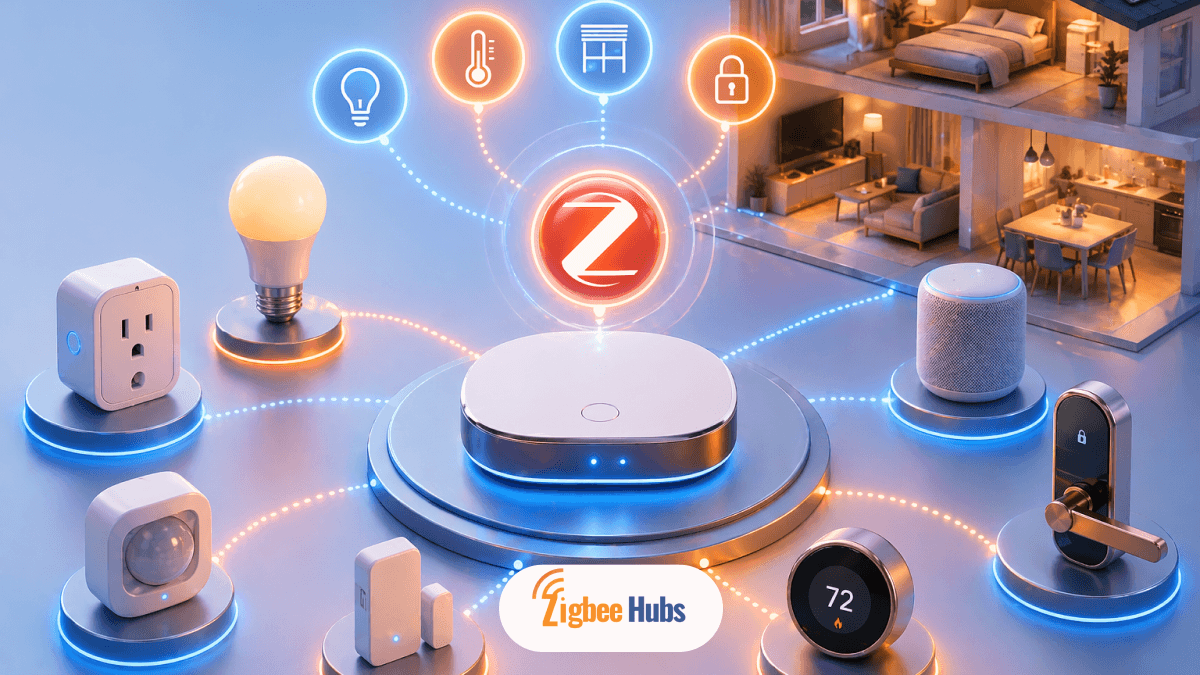
What Is a Zigbee Gateway and Why Do You Need One?
A Zigbee bridge acts as a translator between your Zigbee smart devices and your home network. Zigbee devices use a special low-power wireless protocol. They cannot speak directly to your Wi-Fi router or phone. The gateway converts their signals into data your apps and voice assistants can understand.
Think of it like this: your Zigbee sensors speak "Zigbee language." Your smartphone speaks "Wi-Fi language." The Zigbee gateway hub sits in the middle and translates every command.
Pro Tip:
I've tested dozens of smart home setups over the years. The single biggest source of frustration is people buying Zigbee bulbs or sensors without realizing they need a gateway. Always check your device's protocol before purchasing.
See more: What is Zigbee
How Do Zigbee Gateways Work
When you tap "turn on lights" in your app, here's what happens:
- Your phone sends the command over Wi-Fi (or the internet) to the gateway.
- The Zigbee smart gateway translates that command into Zigbee protocol.
- The gateway broadcasts the signal to your Zigbee light bulb.
- The bulb turns on and sends a confirmation back through the same chain.
This entire process happens in milliseconds with a quality gateway.
Do You Really Need a Zigbee Gateway Hub?
Yes. If you plan to use any Zigbee-compatible devices, a Zigbee gateway hub is non-negotiable. Here's why:
- Protocol Bridging: Zigbee devices cannot connect to the internet alone. The gateway makes remote control possible.
- Local Automation: Quality gateways like the MOES Zigbee gateway run automations locally. Your lights still work if your internet drops.
- Reduced Wi-Fi Congestion: Offloading 50+ sensors to Zigbee frees your Wi-Fi for phones, laptops, and streaming.
- Unified Control: One gateway can manage devices from multiple brands under a single app like the SmartLife gateway interface.
What to Watch Out For: Some cheap gateways require constant cloud connectivity. If the manufacturer's servers go down, so does your smart home. Always check whether a gateway supports local control.
Advanced Setup: Zigbee on Raspberry Pi
For maximum control, running Zigbee on Raspberry Pi is the ultimate DIY solution. You'll need:
- A Raspberry Pi (Model 3B+ or newer)
- A Gateway Zigbee 3.0 USB coordinator (like the Sonoff Zigbee 3.0 Dongle Plus)
- Home Assistant or Zigbee2MQTT software
Why Build a Raspberry Pi Zigbee Gateway?
- Complete ownership: No cloud, no subscriptions, no manufacturer shutdowns.
- Unlimited customization: Write your own automations with full access to device data.
 Ishara Fernando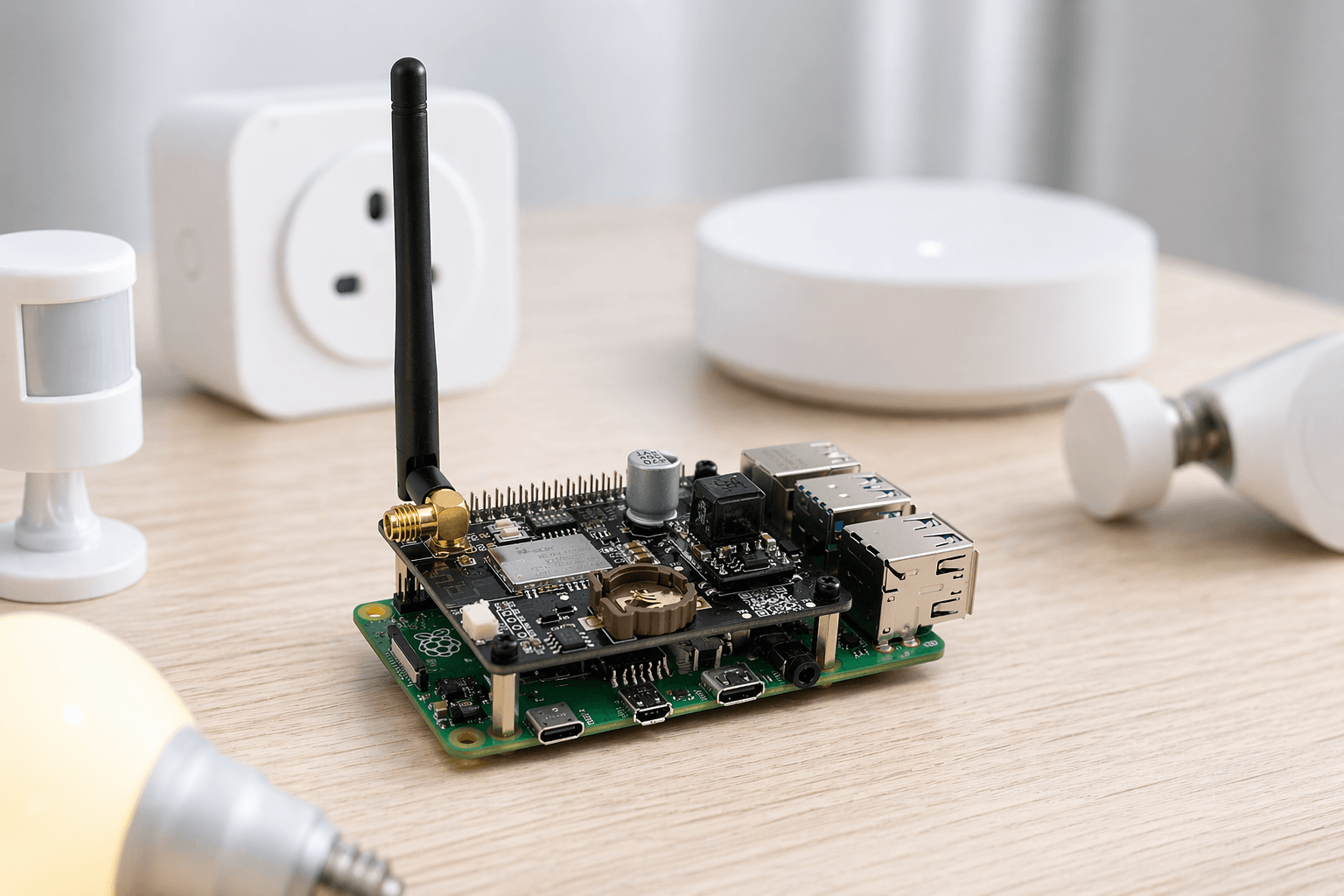
Zigbee Gateway vs. Other Smart Home Protocols
How does a Zigbee bridge compare to alternatives like Z-Wave, Thread, or Matter?
| Feature | Aqara Hub M3 | Hubitat C-8 Pro | Homey Pro 2023 | SONOFF Dongle Plus | Tuya Zigbee Gateway |
|---|---|---|---|---|---|
| Zigbee Version | 3.0 | 3.0 | 3.0 | 3.0 | 3.0 |
| Other Protocols | Matter, Thread, IR | Z-Wave, Matter | Z-Wave, Matter, Bluetooth, Wi-Fi | Coordinator only | Wi-Fi Bridge |
| Local Control | Yes | Yes | Yes | Yes | Limited |
| Matter Support | Yes | Yes | Yes | Partial | No |
| Cloud Required | Optional | No | No | No | Yes |
| Setup Difficulty | Easy | Medium | Easy | Advanced | Easy |
| Best Ecosystem | Apple Home | Multi-protocol | Multi-brand | Home Assistant | Smart Life |
| Our Rating | ⭐⭐⭐⭐⭐ | ⭐⭐⭐⭐⭐ | ⭐⭐⭐⭐☆ | ⭐⭐⭐⭐⭐ | ⭐⭐⭐⭐☆ |
Our Take: Zigbee remains the best choice for most smart home builds in 2026. It has the largest device selection, proven reliability, and excellent battery life for sensors. Thread/Matter is promising but still maturing.
Why is My Zigbee Gateway Not Detecting Devices?
If your Zigbee devices are not pairing, check these:
- Distance
- Interference
- Reset
- Channel Conflicts
Keep devices within 2-5 meters during first pairing.
Wi-Fi routers and USB 3.0 devices can interfere with Zigbee signals.
Factory reset the Zigbee device before pairing again.
Make sure your Zigbee network is not overlapping with Wi-Fi channels.
Which Zigbee Gateway Should You Buy in 2026?
For most users, the Aqara Hub M3 is the best Zigbee gateway in 2026 thanks to its Zigbee 3.0, Matter, Thread, and strong ecosystem support.
If you want advanced local automation, Hubitat or Home Assistant with SONOFF are better choices. If you're just getting started, the Tuya Zigbee Gateway offers the easiest and most affordable entry point.
Choose the gateway that matches your smart home ecosystem now—because every Zigbee device you add later will depend on it.