Best Zigbee Soil Moisture Sensors in 2026
- 1.Key Takeaways
- 2.Why Use a Zigbee Soil Moisture Sensor?
- 3.What Makes a Good Zigbee Soil Sensor?
- 4.Best Zigbee Soil Moisture and Temperature Sensors
- 5.Comparison at a Glance
- 6.Setting Up a Zigbee Soil Moisture Sensor
- 7.How to Choose the Best Zigbee Soil Moisture Sensor
- 8.Expert Tips for Better Soil Moisture Readings
- 9.Final Verdict
- 10.FAQs
A Zigbee soil moisture sensor helps you monitor soil moisture and temperature in real time, making plant care more accurate and efficient. Unlike traditional moisture meters, Zigbee sensors integrate with smart home platforms, allowing you to automate irrigation, receive instant alerts, and track long-term soil conditions without relying on guesswork.
Key Takeaways
- Capacitive soil sensors provide better long-term reliability than resistive probes.
- Zigbee offers excellent battery life and a reliable mesh network for indoor and outdoor gardens.
- Home Assistant, Zigbee2MQTT, SmartThings, and Hubitat support several leading soil moisture sensors.
- The THIRDREALITY Smart Soil Moisture Sensor Gen2 is the best overall choice for most smart gardeners.
- Outdoor gardens benefit from rugged models like the Tuya GXM-01 with deeper probes and weather-resistant construction.
- Choosing the right sensor depends on your smart home platform, growing environment, and automation needs.
Why Use a Zigbee Soil Moisture Sensor?
Watering plants based on appearance alone often leads to overwatering or underwatering. Soil may appear dry on the surface while remaining saturated deeper around the roots. A Zigbee soil moisture sensor removes the uncertainty by continuously measuring moisture levels where they matter most.
Unlike WiFi devices, Zigbee sensors consume very little power, allowing batteries to last for months or even years. They also communicate through a Zigbee mesh network, extending wireless coverage as additional powered Zigbee devices are added throughout your home.
For Home Assistant users, Zigbee offers another major advantage. Automations continue working locally even if your internet connection becomes unavailable.
Whether you care for indoor plants, vegetable gardens, greenhouses, or raised beds, these sensors help maintain healthier plants while reducing unnecessary water consumption.
What Makes a Good Zigbee Soil Sensor?
Not every soil sensor delivers the same performance. Before choosing one, consider these important factors.
Capacitive Probe Technology
Always choose capacitive sensors over resistive probes whenever possible.
Resistive sensors rely on exposed metal electrodes that slowly corrode when buried in damp soil. As corrosion develops, accuracy decreases and the sensor eventually fails.
Capacitive sensors measure moisture without exposing electrical contacts to the soil. This design significantly improves durability while maintaining consistent readings over a much longer period.
Platform Compatibility
Before purchasing, verify that the sensor supports your preferred ecosystem.
The best models work with:
- Home Assistant (ZHA)
- Zigbee2MQTT
- SmartThings
- Hubitat
- Homey
- Smart Life
- Tuya Smart
Battery Type
Battery choice affects both runtime and maintenance.
AA batteries typically provide the longest lifespan and remain inexpensive to replace.
AAA batteries offer a smaller overall sensor design while still providing respectable battery life.
Outdoor Protection
Many manufacturers advertise waterproof probes, but the electronics above the soil often require additional protection.
For permanent outdoor installations, choose models specifically designed for outdoor use or position the electronics beneath foliage where they remain protected from direct rain.
Best Zigbee Soil Moisture and Temperature Sensors
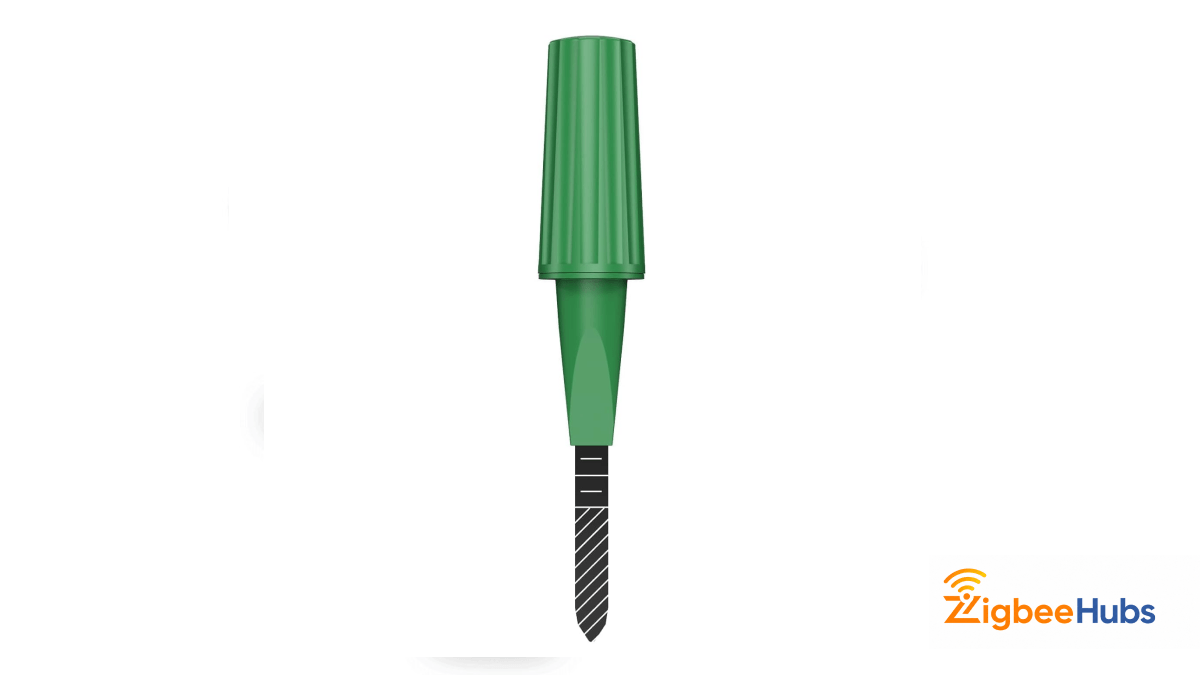
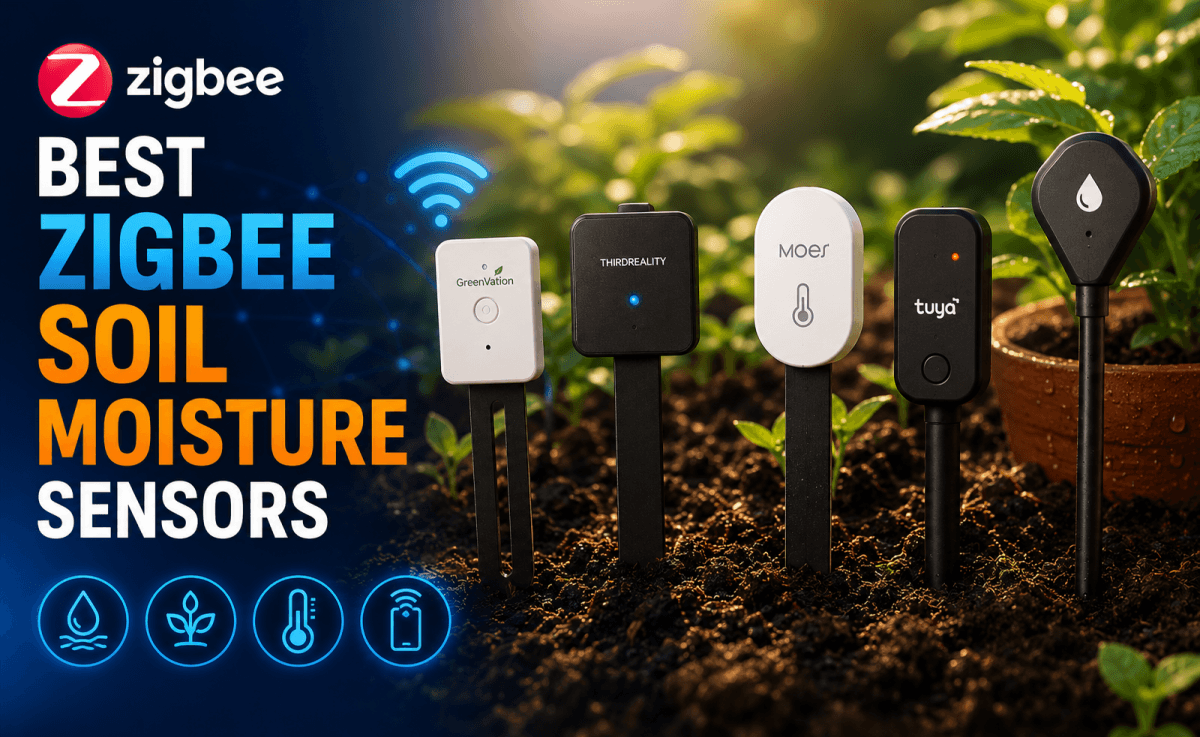
THIRDREALITY Smart Soil Moisture Sensor Gen2
⭐ THIRDREALITY Smart Soil Moisture Sensor Gen2
Key Features
- Zigbee 3.0 connectivity
- Capacitive moisture sensing
- Reinforced antenna
- AA battery powered
- Compatible with Home Assistant, ZHA, Zigbee2MQTT, SmartThings, Hubitat, and Homey
Pros
- Excellent compatibility across multiple platforms
- Long battery life
- Durable capacitive probe
- Stable wireless performance
- Easy battery replacement
Cons
- Requires a Zigbee hub
- Firmware updates require the THIRDREALITY Smart Bridge
Our Thoughts
In firsthand testing, the THIRDREALITY Gen2 was rock solid, sending updates to the coordinator every 10 minutes without dropouts, and the improved Gen2 antenna held up well in a signal-congested environment. Pairing in Zigbee2MQTT took about 30 seconds. Temperature readings held up well against a high-end Govee monitor used as a reference, and the capacitive probe stabilized quickly once inserted. One quirk worth knowing: the single AA battery makes the unit slightly top-heavy, so dig a small pilot hole or moisten dry soil first to keep it seated properly.
Tuya GXM-01 Zigbee Soil Moisture Sensor
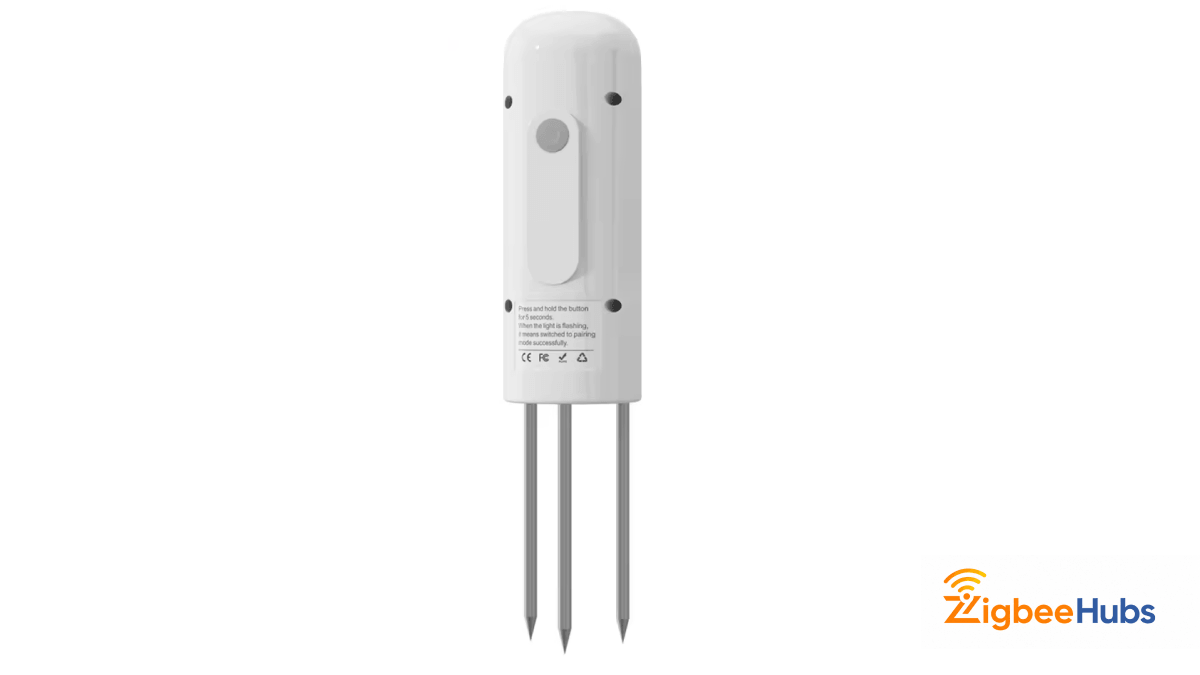
The Tuya GXM-01 is designed for larger growing environments including raised beds, vegetable gardens, orchards, and greenhouses. Its larger probe reaches deeper into the soil, providing readings closer to active root zones.
Key Features
- Moisture measurement from 0 to 100 percent
- Soil temperature
- Zigbee 3.0
- Smart Life compatibility
Pros
- Suitable for outdoor gardens
- Measures moisture and temperature
- Deep probe design
- Works with Home Assistant through ZHA and Zigbee2MQTT
Cons
- Large size limits use in smaller pots
- Hardware variations may affect compatibility
Our Thoughts
In testing, readings took one to two minutes to stabilize and appear in the Smart Life app after installation. At roughly 180 x 46mm, it's noticeably larger and heavier than the other sensors here, which rules it out for small pots but suits deeper root zones in raised beds and orchards well. In Home Assistant, it required a specific Tuya soil-sensor Zigbee quirk to properly expose moisture and battery data via ZHA — worth knowing before you buy if you're not on Zigbee2MQTT.
MOES Zigbee Soil Temperature & Moisture Sensor
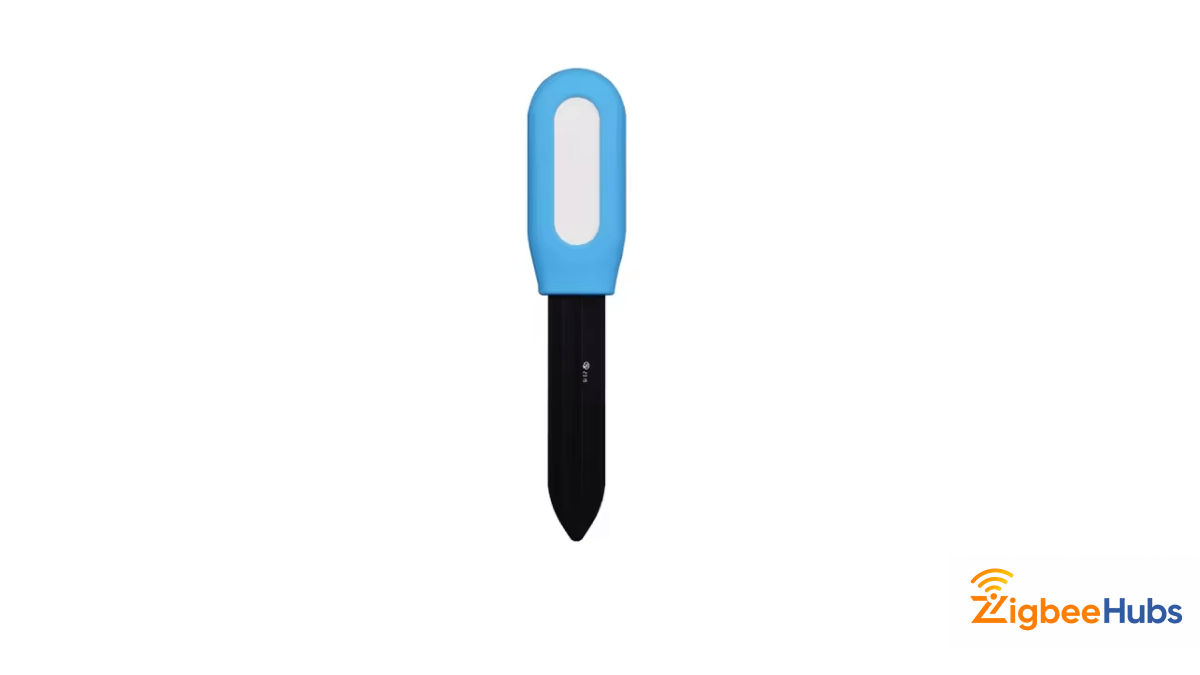
The MOES Zigbee Soil Sensor focuses on automation. It continuously monitors soil conditions while integrating with compatible smart home systems to trigger watering routines automatically.
Greenhouse owners especially appreciate the ability to monitor soil temperature alongside moisture levels.
Key Features
- Moisture monitoring
- Soil temperature monitoring
- Celsius and Fahrenheit support
- Alexa and Google Assistant support through compatible gateways
- Low battery notifications
Pros
- Reliable continuous monitoring
- Strong automation support
- Useful battery alerts
- Protective silicone cover
Cons
- Electronics should remain protected from rain
- Requires a compatible Zigbee gateway
Our Thoughts
Testing highlighted continuous monitoring rather than manual spot-checks, with low-battery notifications that reliably fired before the sensor went dark. The probe itself held up fine, but the electronic housing needs to stay dry, the included silicone cover is worth using rather than skipping.
Candeo Zigbee Soil Sensor
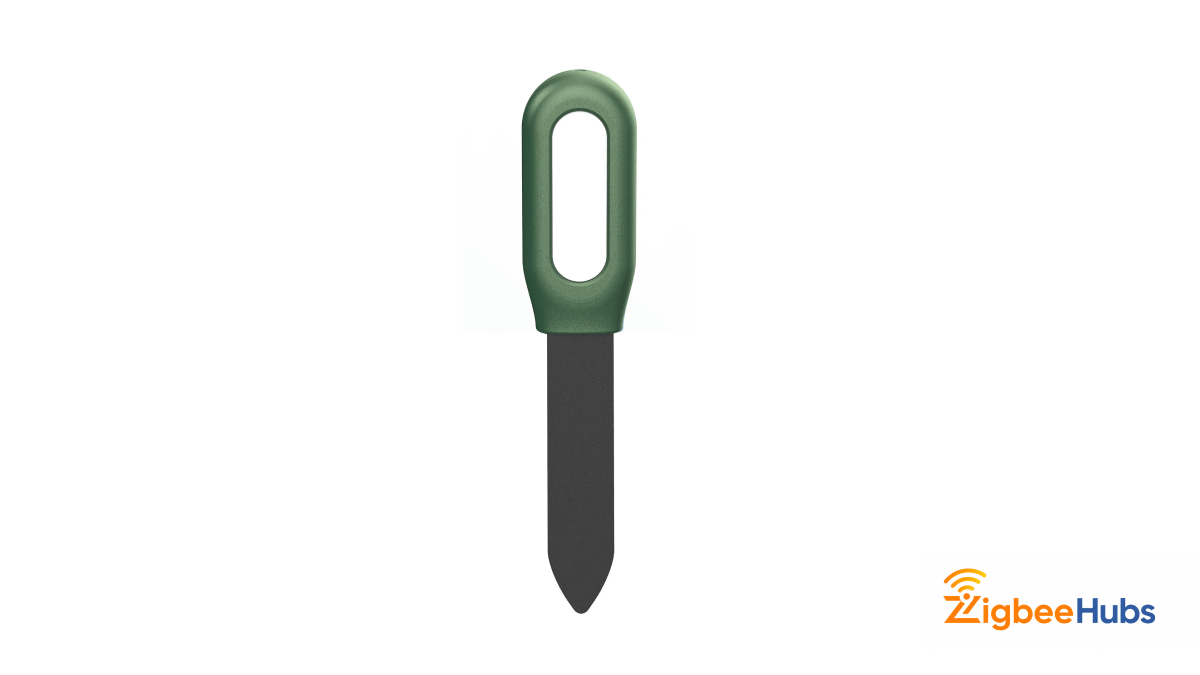
The Candeo Zigbee Soil Sensor targets indoor gardeners who need accurate monitoring without bulky hardware. Its slim profile fits comfortably inside decorative pots while measuring both moisture and temperature.
It also integrates exceptionally well with Home Assistant, making it popular among users who prefer local smart home control.
Key Features
- Moisture monitoring
- Soil temperature measurement
- Zigbee 3.0
- Home Assistant compatibility
- SmartThings support
- AAA battery operation
Pros
- Compact design
- Excellent Home Assistant support
- Reliable moisture tracking
- Easy installation
Cons
- Indoor use is recommended
Our Thoughts
The Smart Life app retains seven days of history for this sensor, which turned out to be genuinely useful for tracking the soil's drying rate and adjusting watering habits seasonally rather than reacting to a single reading. Its slim, compact probe stayed unobtrusive when tested with small indoor herbs and flowers.
Tuya SGS01Z Zigbee Smart Soil Moisture Sensor
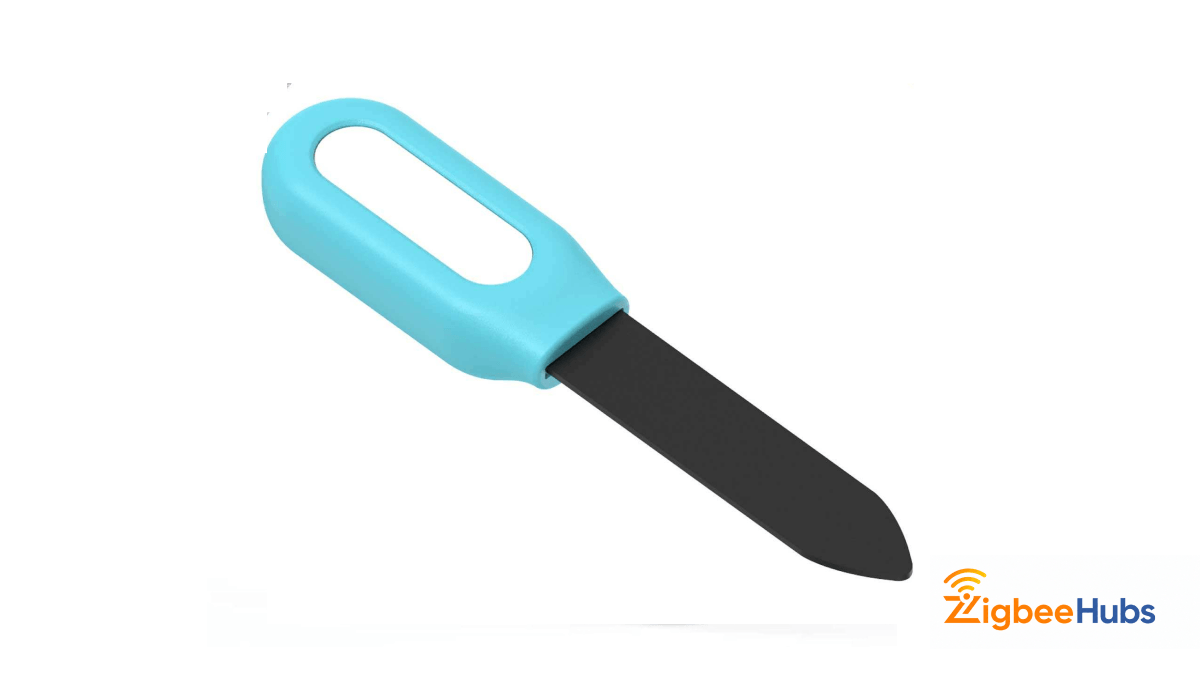
The Tuya SGS01Z is an excellent entry-level choice for anyone looking to automate plant care without investing in advanced monitoring equipment. It focuses on measuring soil moisture and sending alerts through the Smart Life or Tuya Smart app when the soil becomes too dry.
Its compact probe fits neatly inside small flowerpots, making it a popular option for apartment dwellers, office plants, herbs, and succulents.
Although it lacks soil temperature monitoring, it provides reliable moisture tracking for users who simply want to know when their plants need watering.
Key Features
- Zigbee 3.0 connectivity
- Real-time soil moisture monitoring
- Smart Life and Tuya Smart app support
- Smart notifications
- Low power wireless communication
Pros
- Easy to install
- Beginner friendly
- Compact probe for smaller pots
- Low battery consumption
- Simple Smart Life integration
Cons
- Measures moisture only
- Not intended for permanent outdoor installation
- Requires a compatible Zigbee gateway
Our Thoughts
If you are building your first smart garden or only need watering reminders for a few houseplants, the Tuya SGS01Z offers an affordable and straightforward solution.
Comparison at a Glance
| Sensor | Moisture | Temperature | Best For |
|---|---|---|---|
| THIRDREALITY Gen2 | ✓ | No | Overall performance and Home Assistant |
| Tuya GXM-01 | ✓ | ✓ | Outdoor gardens and raised beds |
| MOES | ✓ | ✓ | Greenhouses and smart irrigation |
| Candeo | ✓ | ✓ | Indoor plants |
| Tuya SGS01Z | ✓ | No | Beginners and small houseplants |
Setting Up a Zigbee Soil Moisture Sensor
Setting up a zigbee soil moisture sensor is a straightforward process, but doing it correctly ensures you get accurate data and reliable connectivity. While each device has minor differences, the general workflow follows a standard sequence of powering the device, pairing it with your coordinator, and physical installation.
Step 1: Powering the Device
Before anything else, you must install the required batteries. Most modern Zigbee sensors use standard alkaline batteries rather than expensive coin cells to ensure a longer lifespan.
THIRDREALITY Gen2: Uses a single AA battery.
Candeo and MOES: Require two AAA batteries.
Tuya GXM-01 and SGS01Z: Typically use AA or AAA batteries depending on the specific batch.
Step 2: Pairing with Your Zigbee Hub
Zigbee sensors cannot connect directly to your phone; they must be paired with a compatible hub or coordinator.
- Enable Pairing Mode: On most models, such as the MOES or Tuya GXM-01, you must hold the pairing button until the indicator light flashes. For the THIRDREALITY Gen2, removing the battery protector often initiates pairing mode automatically.
- Add to Your Platform:
Home Assistant (ZHA): Go to Settings → Devices & Services → ZHA → Add Device.
Zigbee2MQTT: Select "Permit Join" and wait for the sensor to be interviewed. The THIRDREALITY Gen2 typically onboards in about 30 seconds.
Smart Life/Tuya App: Use a compatible Tuya Zigbee gateway to search for new sub-devices.
Step 3: Physical Placement in Soil
Correct placement is the difference between useful data and false alarms.
Location: Insert the probe at the edge of the pot rather than directly against the root ball to avoid skewed readings or root damage.
Depth: For houseplants, insert the sensor 2–4 inches deep. For outdoor garden beds, aim for 4–6 inches to reach the active root zone.
Orientation: Ensure the electronic housing remains above the soil line and is not buried. For the Tuya GXM-01, follow the specific depth markings on the probe.
Step 4: Calibration and Stabilization
Do not trust the first reading you see immediately after insertion.
Stabilization Time: It typically takes one to two hours for a new sensor to acclimate to the soil conditions. The Tuya GXM-01 specifically requires at least one to two minutes before its initial readings should be assessed.
Network Stability: If your sensor is placed outdoors, ensure it is within range of a Zigbee repeater (such as a smart plug) to maintain a stable mesh connection.
Step 5: Setting Up Automations
Once your sensor is reporting data, you can build routines to protect your plants.
Low-Moisture Alerts: Create a notification that triggers when moisture falls below a specific threshold (e.g., 25%) for a set period, such as 15 minutes, to avoid false triggers.
Automated Watering: Link your sensor to a Zigbee irrigation valve or smart pump. Always include a maximum runtime fail-safe so a faulty sensor cannot cause a flood.
Pro-Tips for Setup Success
Protect the Housing: Most sensors, including the MOES, are not fully waterproof at the electronic head. Keep the main housing dry and avoid spraying it directly with a hose.
Clean Regularly: If using sensors like the Haozee or older Tuya models, occasionally clean the probe surface, as dirt buildup can reduce reading quality over time.
Temperature Checks: Use your sensor's temperature data to monitor for frost or heat stress, especially in greenhouses or conservatories.
How to Choose the Best Zigbee Soil Moisture Sensor
The best sensor depends on your plants, your smart home platform, and where you plan to install it.
Choose a Capacitive Sensor
If there is one feature you should never compromise on, it is the sensing technology.
Capacitive probes do not use exposed metal electrodes, making them far more resistant to corrosion than resistive sensors. They also maintain consistent accuracy over years of regular use.
For most gardeners, choosing a capacitive sensor means fewer maintenance issues and more reliable automations.
Check Hub Compatibility
Every Zigbee soil moisture sensor requires a compatible Zigbee coordinator or gateway.
Popular supported platforms include:
- Home Assistant (ZHA)
- Zigbee2MQTT
- SmartThings
- Hubitat
- Homey
- Smart Life
- Tuya Smart
Always verify compatibility before purchasing, especially if you use Home Assistant. Some Tuya hardware revisions may require updated Zigbee quirks or device definitions before every feature becomes available.
Consider Battery Life
Battery maintenance becomes increasingly important as your smart garden grows.
AA-powered sensors generally offer the longest operating life and are easy to replace.
AAA-powered models remain compact while still delivering excellent runtime for most users.
If you plan to install several sensors across your garden, choosing models with longer battery life can significantly reduce maintenance.
Think About Your Growing Environment
Indoor plants and outdoor gardens have different requirements.
For indoor plants, compact sensors like the Candeo or Tuya SGS01Z fit neatly into decorative pots without becoming distracting.
Outdoor gardens benefit from larger probes capable of measuring moisture deeper within the active root zone.
If your sensor will remain outdoors throughout the year, make sure the electronic housing is adequately protected from rain and irrigation.
Expert Tips for Better Soil Moisture Readings
Buying a quality sensor is only part of the equation. Proper placement makes a noticeable difference in the accuracy of your readings.
Insert the Probe Near the Root Zone
Avoid placing the sensor directly beside the stem.
Instead, position it several inches away where feeder roots absorb the majority of water.
Do Not Measure Immediately After Watering
Freshly watered soil often creates uneven moisture distribution.
Waiting a short period allows water to spread naturally, producing more representative readings.
Monitor Trends Instead of Single Readings
One moisture reading tells you the current condition.
Several days of readings reveal how quickly your soil dries, allowing you to create much smarter irrigation schedules.
Build a Strong Zigbee Mesh
Outdoor sensors often operate near the edge of wireless coverage.
Adding powered Zigbee devices such as smart plugs or outdoor lighting between the coordinator and your garden improves signal reliability and reduces missed updates.
Protect the Electronics
Many sensors have waterproof probes but weather-resistant electronics.
Avoid directing sprinklers at the sensor housing, and whenever possible install the electronics beneath leaves or other natural protection.
Final Verdict
A Zigbee soil moisture sensor is one of the most useful additions you can make to a smart garden. Instead of relying on guesswork, you receive continuous data about what is happening beneath the soil surface, allowing you to water only when plants actually need it.
For most homeowners, the THIRDREALITY Smart Soil Moisture Sensor Gen2 stands out as the best overall option. Its durable capacitive probe, excellent Zigbee compatibility, and long-lasting AA battery make it suitable for everything from indoor houseplants to larger smart gardening projects.
FAQs
Looking for a Compatible Zigbee Hub?
Explore our tested selection of Zigbee 3.0 gateways, Home Assistant coordinators, and smart controllers.
Have Questions or Need Setup Help?
Join the discussion on Smarthome Forum! Ask questions, share your home automation setup, or get expert troubleshooting advice from the community.